Table of Contents
- Engraved vs Printed Wedding Gifts: Key Differences
- Engraved vs Printed Durability Comparison
- Cost-Benefit Analysis of Customisation Methods
- Personalised Wedding Gift Ideas for Different Budgets
- Sustainability of Custom Gifts
- Which Method Should You Choose?
- Frequently Asked Questions
Last Updated: September 22, 2026
Engraved vs Printed Wedding Gifts: Key Differences
When choosing a personalised wedding gift, the customisation method matters as much as the item itself. At IL-ĦSIEB KOLLOX, we help customers understand how engraved vs printed wedding gifts differ in durability, cost, and longevity. Both approaches create meaningful keepsakes, but they suit different occasions and budgets.
The key distinction lies in how the personalisation is applied. Engraving physically removes material from the surface, while printing applies ink or colour to the top. This fundamental difference shapes everything from how long the gift lasts to how it looks years later.
How Engraving Works
Engraving uses mechanical or laser tools to cut, etch, or burn text and designs directly into a material's surface. The process creates a permanent indentation that becomes part of the object itself.
Laser engraving is a common method for wedding gifts. A focused laser beam vaporises the surface layer, leaving behind a precise mark. This works on wood, acrylic, leather, and metal.
How Printing Works
Printing applies ink, dye, or colour directly onto the surface of an object. Full-colour printing allows for detailed photos, gradients, and complex designs that engraving cannot easily achieve.
Direct-to-product printing uses technology to apply designs. This method produces vibrant results and is ideal for displaying wedding photos or detailed artwork on wooden plaques or ceramic mugs.

Engraved vs Printed Durability Comparison
Engraved items last indefinitely. Because the design is physically part of the material, it cannot fade, chip, or peel. An engraved wooden plaque or metal keepsake will look the same in 50 years as it does on the wedding day.

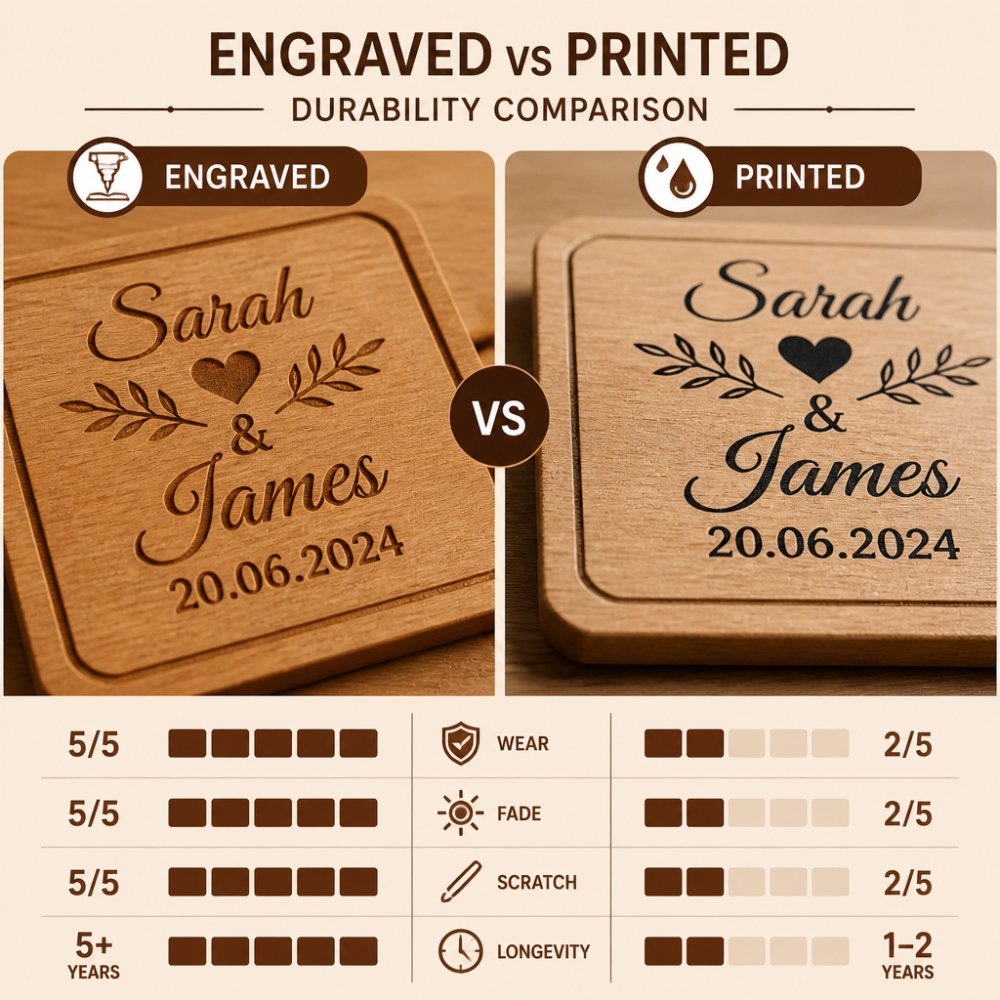
Printed items can fade with time and exposure. Sun, moisture, and handling can wear away the ink layer gradually. Printed ceramics and mugs may fade faster, especially with repeated washing and microwave use.
| Customisation Method | Durability | Best For | Fade Risk |
|---|---|---|---|
| Laser Engraving | Lifetime | Heirloom gifts, display pieces | None |
| Hand Engraving | Lifetime | Premium metals, crystal | None |
| Full-Colour Printing | 10-20 years | Photos, detailed designs | High |
| Sublimation Printing | 5-10 years | Ceramics, textiles | Very high |
Engraving works on solid materials like wood. Printing works on ceramics and wood.
Where the gift will be displayed matters. Engraved items displayed on a shelf or wall can remain pristine. Printed items in direct sunlight, high-moisture environments (like kitchens), or frequently handled may fade noticeably.
Cost-Benefit Analysis of Customisation Methods
Engraving typically costs more upfront. A laser-engraved solid oak photo frame from IL-ĦSIEB KOLLOX starts at €30-€33, depending on the design complexity and frame size.
Printing costs less initially. A full-colour printed wooden plaque from IL-ĦSIEB KOLLOX is €23. Printed ceramic mugs start at €12. The lower entry price makes printing attractive for budget-conscious couples or when ordering multiple gifts.

The real cost-benefit can emerge over time. If durability and sentimentality matter, engraving can offer better long-term value.
For weddings, the gift's emotional weight influences the choice. A personalised keepsake meant to commemorate the marriage and last generations justifies the engraving premium. A thank-you gift for the wedding party or bridal shower guests might be better served by printed items at lower cost.
Customisation complexity can also affect price. Both methods scale: ordering multiple engraved items costs more than ordering fewer, but the per-unit cost can drop.
Personalised Wedding Gift Ideas for Different Budgets
Budget shapes not just what you buy, but which customisation method makes sense. Understanding this relationship helps you maximise sentimental value and durability within your spending limit.
Under €15: Printed gifts for large groups
When gifting to the entire wedding party or a large guest list, printing becomes the practical choice. Printed ceramic mugs or wooden coasters allow you to personalise each item affordably whilst maintaining consistency across multiple recipients. The lower per-unit cost means you can give meaningful gifts to 15-20 people without exceeding a reasonable budget.
The trade-off: printed items can fade over time. For bridesmaids, groomsmen, or casual guests, this can be acceptable, the gift's value lies in the immediate gesture and the practical use (a mug for daily coffee). Printed items can work best when the recipient will use them regularly rather than display them as heirlooms.
€15-€30: The crossover zone where method choice matters most
This price range is where engraving and printing compete directly. A printed wooden plaque with a detailed wedding photo costs around €20-€25. An engraved wooden frame at €30-€33 costs slightly more but lasts indefinitely.
The decision hinges on the recipient and your intent. If you're buying for the couple themselves, parents, grandparents, or close family, the engraved frame justifies the premium. It becomes a permanent fixture in their home, a keepsake that survives decades of moves, renovations, and life changes. If you're buying for wedding party members or distant relatives, the printed plaque offers better perceived value at the lower price point.
Material quality also enters this range. A printed plaque on pine looks less premium than an engraved frame on solid oak, even if the printed item costs less. The material signals permanence and care, which influences how the recipient perceives the gift's worth.
€30-€50: Premium engraving becomes accessible
Personalised Deluxe Solid Oak Landscape →
At this price point, engraved items can move beyond simple frames into heirloom territory. Solid oak photo frames with laser engraving or bespoke wooden plaques with intricate designs become feasible.
These gifts suit parents, grandparents, or the couple's closest friends. The higher cost reflects both the material quality and the permanence of the customisation. A €40 engraved wooden plaque will look identical in 30 years; a €25 printed plaque will show visible fading.
€50+: Artisanal and hand-engraved pieces
This tier suits milestone gifts: parents buying for their child's wedding, grandparents commissioning a family keepsake, or very close friends investing in something truly lasting.
Budget strategy summary
Think of budget not as a constraint but as a signal of intent. Low budgets (under €20) pair naturally with printing and practical items. Mid-range budgets (€20-€40) allow you to choose between printing for groups or engraving for individuals. High budgets (€40+) unlock premium materials and hand-crafted customisation that create genuine heirlooms.
The most common mistake is spending on a printed item for someone who deserves an engraved one, or spending on an engraved mug that will be used daily and eventually chipped or lost. Match your budget to the recipient's relationship to the couple and the gift's intended lifespan.
Sustainability of Custom Gifts
Sustainability is increasingly important to modern couples. Understanding the lifecycle of engraved versus printed gifts can reveal that engraving is often the more sustainable choice, despite higher upfront production costs.
The replacement cycle problem with printed gifts
Printed items can have a finite lifespan. Printed ceramics may fade faster with repeated washing and microwave use. When fading becomes unacceptable, the couple faces a choice: keep a faded keepsake or replace it.
Replacement can create hidden environmental cost. Manufacturing a replacement plaque can require new raw materials, new production energy, and new shipping. The original plaque, now discarded, can become waste. Over time, a printed gift might require replacements, increasing the material and energy footprint compared to a single engraved item that never fades.
Engraved items can eliminate this cycle. An engraved wooden plaque can look identical in year 50 as it does on the wedding day. No replacement needed. No waste generated. The environmental cost is paid once, at production, and amortised across decades.
Material sourcing and waste reduction
Both methods can use sustainable materials, but production efficiency differs. Engraving typically uses solid wood (oak) or reclaimed materials. The laser engraving process removes minimal material, only the surface layer is altered. Waste is negligible.
Printing can also use sustainable wood, but the production process can require pre-treatment of surfaces, application of sealants, and sometimes disposal of failed prints during quality control. Full-colour printing can involve processes that, whilst safe for the end product, generate production waste.
Mass-produced custom items (whether engraved or printed) carry an environmental cost that bespoke or small-batch items do not.
Longevity as the primary sustainability metric
Choosing sustainable customisation
To minimise environmental impact:
- Choose engraving for display pieces intended to last decades (photo frames, plaques, decorative items). The one-time production cost is offset by zero replacement waste.
- Choose printing for practical, everyday items that will be used regularly (mugs, tea towels, aprons). Daily use justifies the item's existence and reduces waste per use.
- Avoid printing on items meant for display, as fading will tempt replacement and waste.
- Ask about material sourcing. Solid wood from sustainable forestry or reclaimed sources is preferable to virgin materials.
- Order quantities thoughtfully. Bulk orders (20+ items) reduce per-unit production impact; single items have higher relative footprint.
- Consider the couple's values. Environmentally conscious couples often prefer engraved heirlooms over items requiring replacement, aligning the gift with their sustainability goals.
Which Method Should You Choose?
Choose engraving if: the gift should last a lifetime, the couple values heirloom-quality keepsakes, the design is simple (names, dates, initials), and you want zero maintenance or fading risk.
Frequently Asked Questions
Are engraved wedding gifts more durable than printed ones?
Engraved gifts generally last longer. Engraving removes material from the surface, making the personalisation permanent and resistant to fading. Printed designs can fade over time, especially with exposure to sunlight or frequent handling. For items displayed in homes, engraved keepsakes maintain their appearance for decades, whilst printed gifts may show wear within 5-10 years depending on material and care.
What are the best personalized wedding gift ideas for different budgets?
Budget-friendly options include personalised ceramic mugs (from €12) perfect for daily use. Mid-range choices feature customised wooden plaques with full-colour print (€23) ideal for displaying wedding photos. Premium selections include engraved solid oak photo frames (€30-€33) that combine heirloom quality with space for engraving names and dates. Each option works as a meaningful keepsake capturing the couple's special moment.
Which customization method looks more premium as a wedding gift?
Engraved gifts typically appear more premium because the personalisation is permanent and integral to the item itself. Engraving on wood or metal creates a sophisticated, bespoke appearance that suggests craftsmanship. Printed gifts, whilst visually striking with full-colour designs, can feel more mass-produced. For wedding gifts specifically, engraved wooden frames or plaques convey thoughtfulness and longevity that newlyweds appreciate as heirloom-quality keepsakes.
How do I choose between engraved and printed for a wedding gift?
Consider the couple's home décor style and how long they'll display the gift. Choose engraving if they prefer minimalist, timeless designs and want something lasting decades. Select printing if the couple wants vibrant, full-colour photos or artwork displayed prominently. Budget also matters: engraved items typically cost slightly more but offer better longevity. Solid oak engraved frames (€30-€33) work beautifully for formal settings, whilst printed wooden plaques (€23) suit couples preferring colourful photo displays.